Is this the right job?
For a small, light, rigid stool that you can safely place on its side, with flat, sound wooden feet. Excludes heavy furniture, folding stools, castors, loose joints and any furniture used as a step stool. Check both the floor-care instructions and pad compatibility first.
Tools to gather
- Ruler — Check each foot and pad size.
- Suitable scissors, only for cut-to-size pads — Trim material only if the pad instructions allow it; ready-sized pads avoid this task.
Materials
- A matching set of compatible adhesive felt pads.
- Soft cloth, finish-compatible cleaner and a protective blanket.
1Make the feet accessible
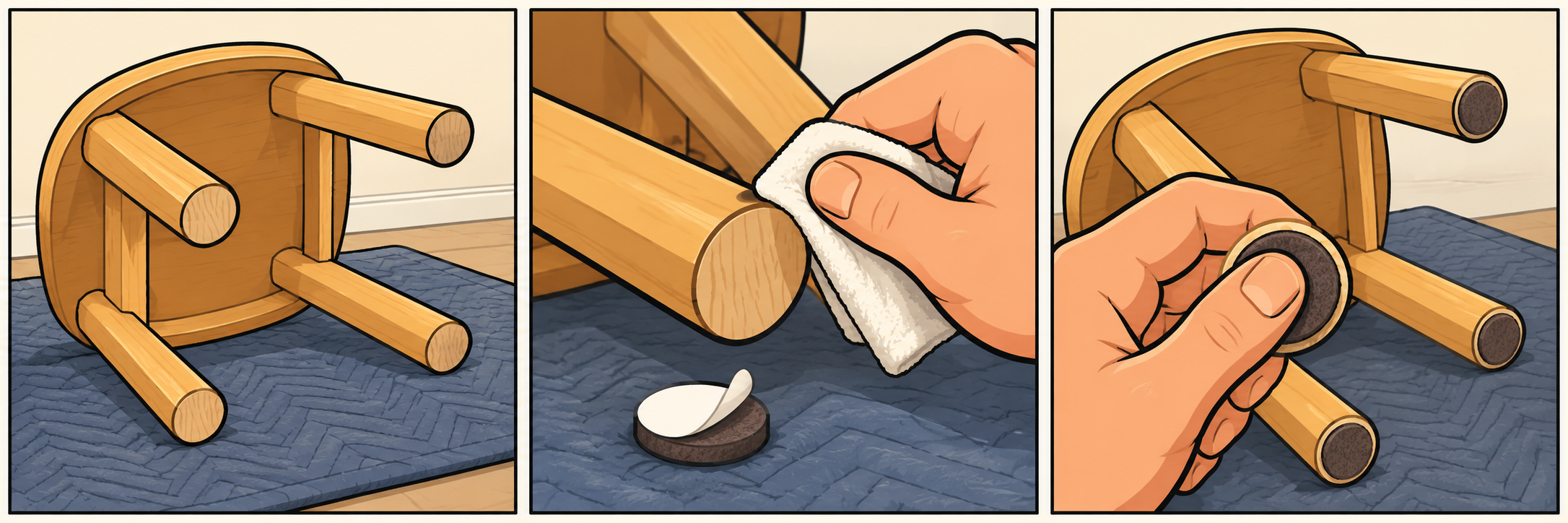
Empty the stool and set it securely on its side on the blanket. Keep the work at floor level. Check all feet before starting: damage or looseness needs a furniture repair, not thicker padding.
2Check the fit
Choose pads that stay inside the flat contact area and suit the floor. Use the same specified type and thickness on all feet. Measure in inches or millimetres as the pack requires; 1 inch equals 25.4 mm.
3Prepare the foot ends
Remove loose dirt and clean as the finish and pad instructions allow. Let the surfaces dry. If old glue cannot be removed without damaging the finish, stop rather than forcing the preparation.
4Attach the pads
If permitted, cut pads separately on a stable work surface with fingers clear of the scissors. Peel off the backing, centre each pad and press as directed. Follow the stated waiting period before returning the stool to use.
5Check and maintain
Set the stool upright carefully. If it rocks or a pad shifts, do not sit on it to force a fix. Inspect pads periodically for wear and trapped grit; replace worn pads and keep the floor clean. Felt is not a guarantee against scratches.
Common mistakes to avoid
- Stacking pads to hide a loose joint.
- Choosing a pad that hangs over the foot edge.
- Leaving gritty or worn pads in service.