Is this the right job?
For a synthetic-bristle brush used with ordinary water-based household paint whose label allows soap-and-water cleanup. This does not cover oil paint, solvent finishes, two-part coatings, unknown products or restoring hardened brushes.
Tools to gather
- Optional brush-cleaning comb, if permitted for your brush — Gently straighten clean bristles; do not force through hardened paint.
Materials
- Stable wash and rinse containers, water and the mild cleaner allowed by the paint and brush instructions.
- Protective work covering and a labelled container for collected wash water.
- The protection specified on the paint and cleaner labels.
1Confirm the cleanup method
Check both labels. If either product requires a solvent or specialist treatment, stop and use its specific instructions instead. Arrange the wash containers on a protected, stable surface.
2Remove excess paint
Work out as much usable paint as practical into the appropriate paint container, without contaminating clean stock. Avoid bending or crushing the bristles.
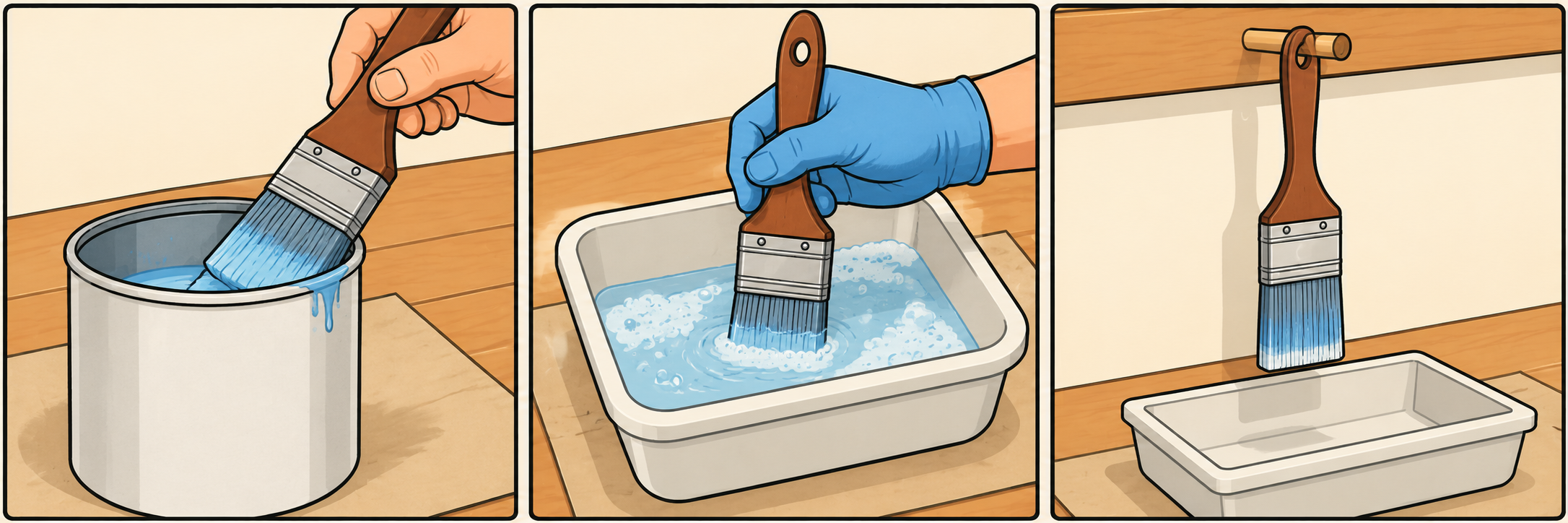
3Wash the bristles promptly
Use the permitted mild cleaner and water in the wash container. Work gently through the bristles, keeping the ferrule (the metal band holding the bristles) and handle out of prolonged immersion. Do not leave the brush soaking. Capture the wash water.
4Rinse and reshape
Rinse in a separate container, repeating with fresh water as needed. Use a compatible brush comb gently if the maker allows it. Shape the bristles without pulling them out. Check for remaining paint between the bristles before drying; do not force a comb through hardened patches.
5Dry and deal with the waste
Hang the brush by its handle so the bristles are not bearing its weight, following its drying and keeper instructions. Retain collected liquid securely until you can use the locally approved disposal route. Water-based does not mean suitable for every drain.
Common mistakes to avoid
- Leaving the brush bristle-down in water overnight.
- Using a solvent just because dried paint is stubborn.
- Assuming local permission for sanitary-sewer disposal also applies to septic tanks or storm drains.