Loose dust and grit can collect where a sliding window travels. Removing that debris is a sensible first maintenance step before assuming the window needs new hardware.
Plan the project
Beginner · Work at your own pace and follow the product’s cleaning instructions; stop if the task exceeds accessible surface cleaning.
Tools and materials
Required tools
Materials
- A small bowl of water
- A finish-compatible cleaning solution only if the window’s instructions allow it
- Dry cloth
Is this your job?
Indoor cleaning of accessible tracks on a sound window, with both feet on the floor. No sash removal, exterior work, scraping paint, repair, or adjustment is included.
Before you start
Keep children and pets away from an open window. Do not lean out, climb on furniture, defeat a restrictor, or rely on an insect screen to prevent a fall. If the window will not remain safely in position, stop. Stop for flaking paint, suspected lead dust, damaged glass, rot, or extensive mold; ordinary brushing or vacuuming is not a safe cleanup method for those hazards.
Project steps
Check access and condition
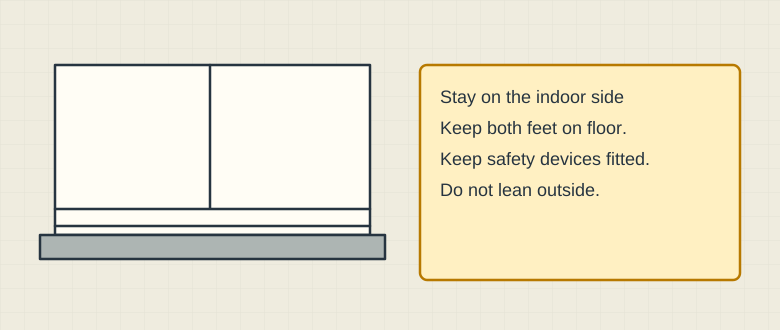
Schematic illustration. Clean only tracks safely reachable indoors. Screens do not prevent falls. Read the window’s operating and care instructions. Open it only enough to reach the track safely from indoors, while keeping all required safety devices in place. If cleaning needs sash removal or overreaching, leave that work for qualified help.
Remove loose ordinary debris
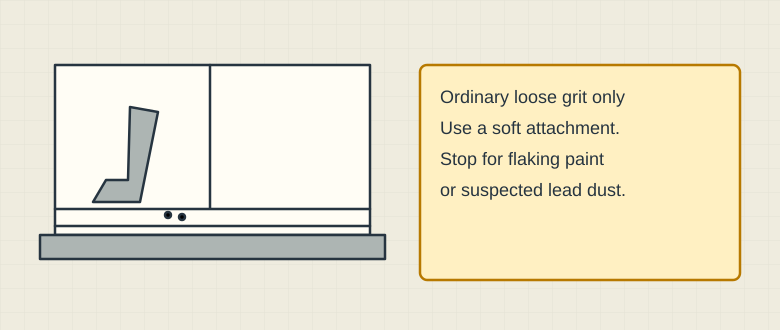
Schematic illustration. Gently remove ordinary loose debris only from sound, intact surfaces. On an intact, cleanable surface, brush or vacuum loose grit gently. Use an attachment that will not scratch the finish. Keep hands and tools out of moving mechanisms and do not remove hardware.
Wipe lightly
Use a well-wrung cloth and the approved cleaning method. Do not flood the track or use pressure washing. Avoid scraping paint or sealant. Do not push objects into drainage slots or fill them with sealant.
Dry before closing
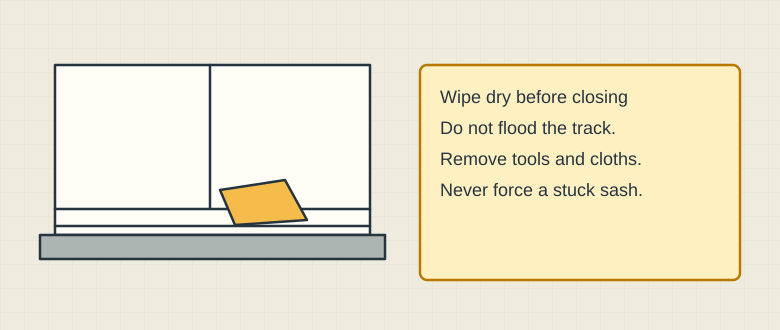
Schematic illustration. Dry accessible surfaces and remove tools before checking normal operation. Wipe away remaining moisture and remove your tools. Check that no cloth or loose debris is caught in the track.
Check ordinary operation
Close and latch the window using its normal controls. If it still binds or will not lock, do not force it or add a random lubricant. Check its maintenance instructions or arrange repair.
Safety & limits
- Using more force when the sash binds. Stop and identify the cause.
- Spraying an unapproved oil into the track. Materials and hardware need their specified care.
- Treating an insect screen as a safety barrier. Stay inside and keep children away.
Sources & further reading
These links document the information used in this article. Manufacturer specifications and source research are not hands-on test results or an endorsement of a purchase.
- CPSC: preventing window falls
Reference checked 2026-10-29